Technology · Material Maker
Surfaces that hold up close, in any light.
A model is only as real as its surfaces. Arcwright builds them from real photographs, puts wear where wear really happens, and tests every important material under four different lights before it goes into a game.
- A referenceA photograph, or a flat-lit reference picture
- A seamless surfaceColour, relief and gloss, with no visible repeat
- Real scaleBricks the size of bricks, boards the width of boards
- Wear where it belongsEdges, seams, where hands and water go
- The light testRaking light, a bulb, the moon, a flashlight
- In the gameOn the model, lit by the scene
01 · The light bench
Four lights, one surface.
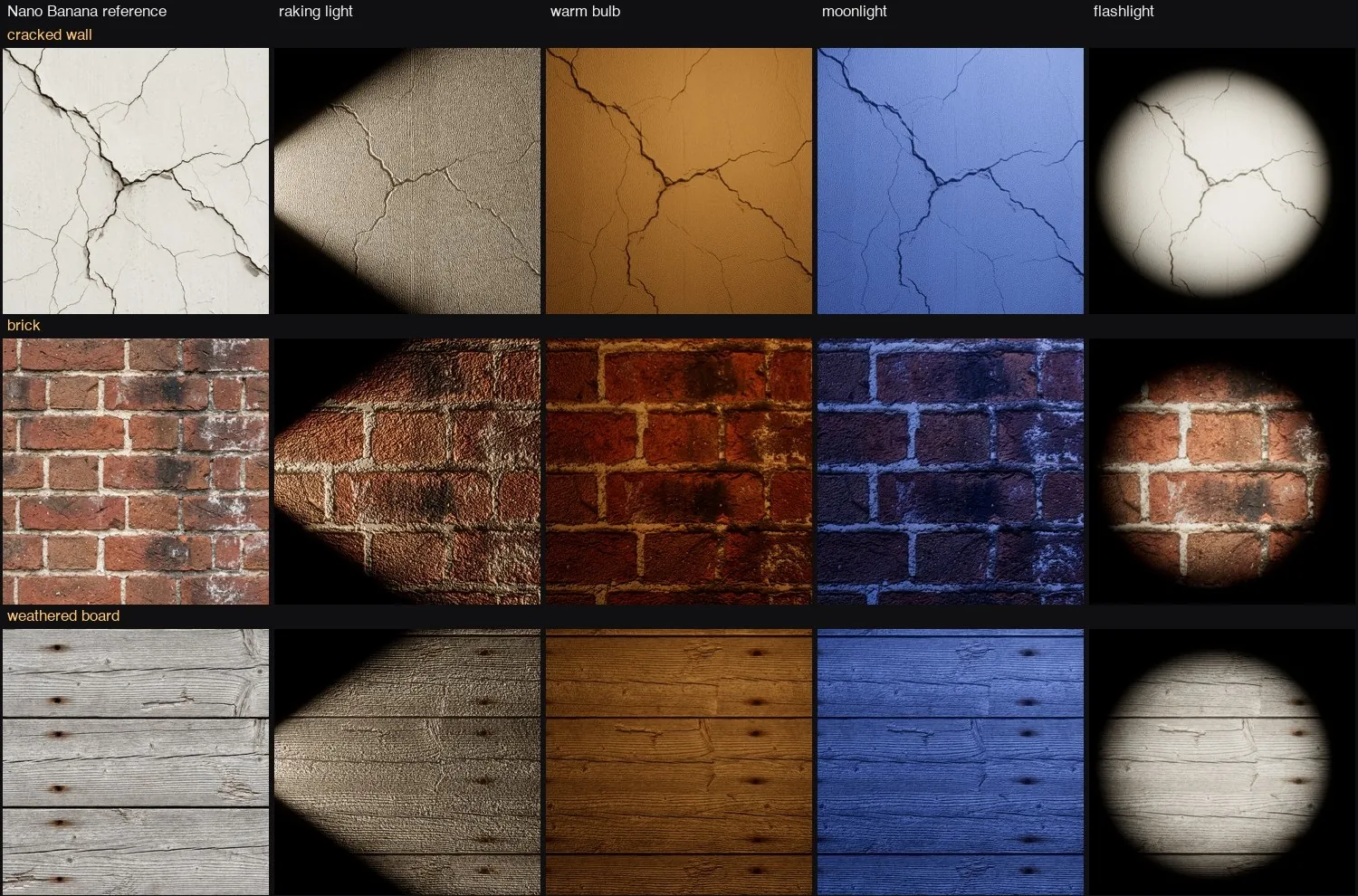
A surface can look right in flat light and fake the moment a lamp rakes across it. So every important material goes on the bench: low raking light shows the relief, a warm bulb close by shows the colour and the gloss, moonlight shows the values in the dark, and a flashlight beam shows how it reads in a game.
We tune the material until it holds up in all four, then it goes into the scene. Tile, leather, carpet and rusted iron went through the same bench.
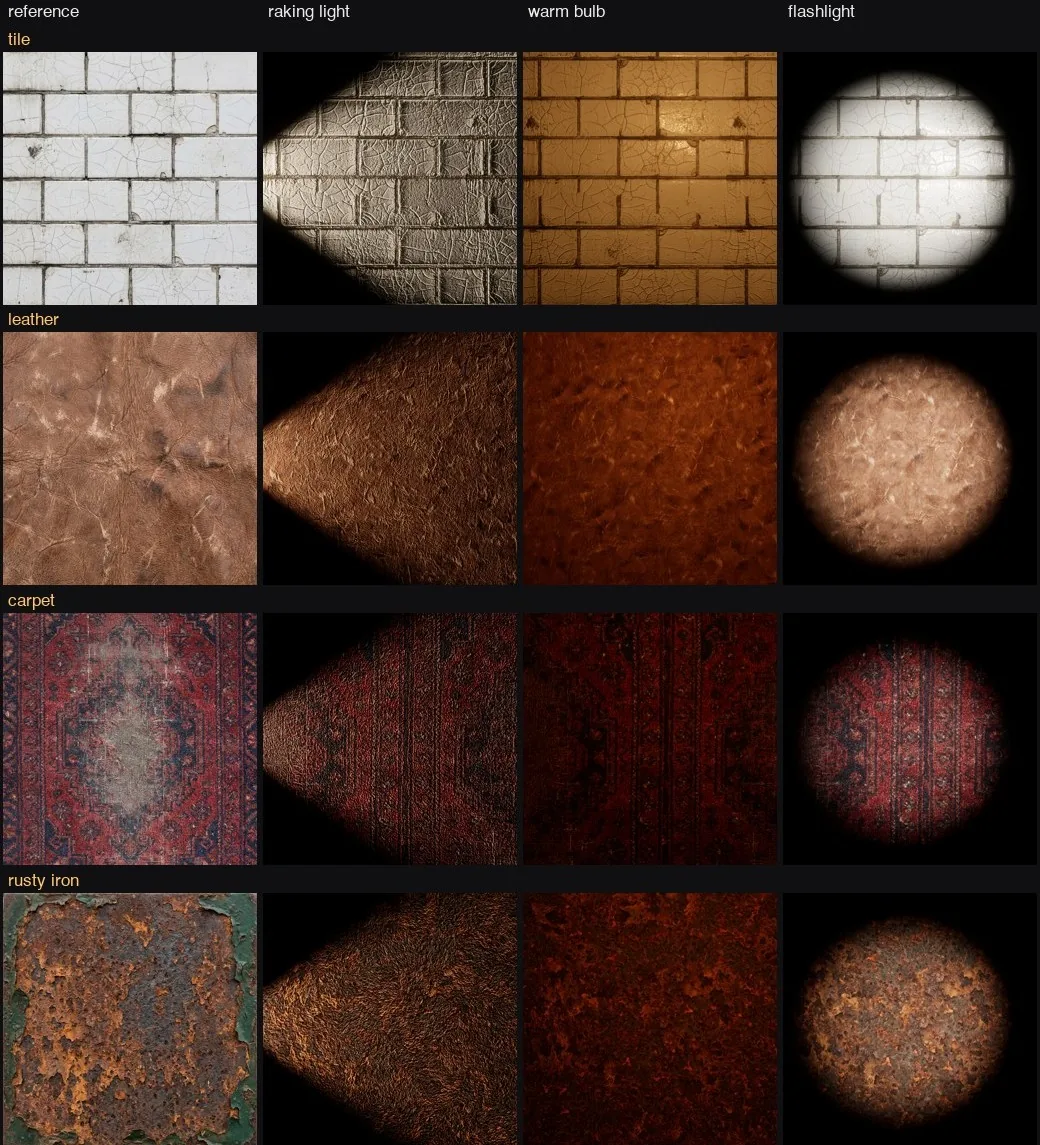
More surfaces on the bench: tile, leather, carpet, rusted iron.
02 · From a photograph
One photo becomes a whole surface.
Give Material Maker a photograph and it becomes a seamless surface: the colour, the relief, how rough or glossy each spot is, and the shading in the cracks. Planks are cut from real board photos, each board its own piece, so no two boards match.
This wall in the Ashgrove mansion is three surfaces from photographs: the wallpaper, the plaster where it tore, and the brick behind it.
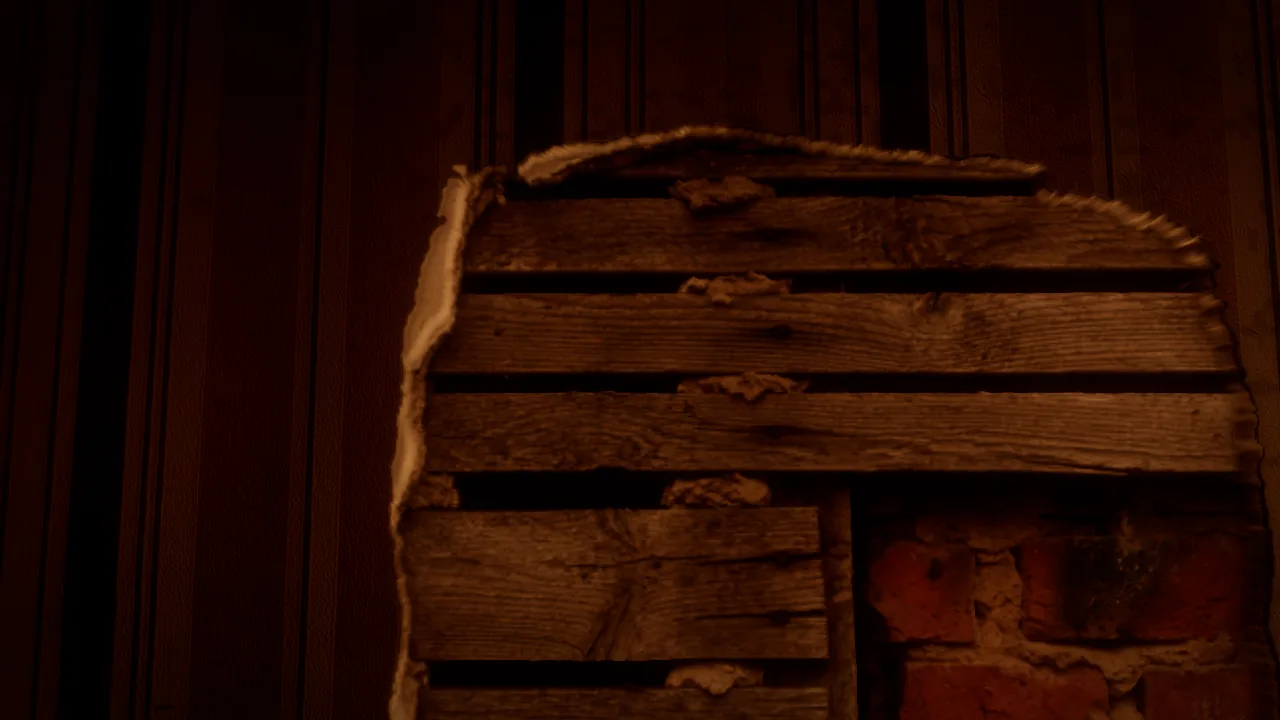
Torn wallpaper, cracked plaster and the brick behind it.
03 · Never repeats
No tiling you can spot.
A floor or a wall made of one repeating picture looks cheap from across the room. Arcwright breaks the repeat on every surface by default and adds large-scale variation on top, so a long wall or a wide floor never shows the same patch twice. Big features like a stain or a crack go on as their own decals.
Before and now: the same boarded windows, before and after every board got its own piece of real wood.
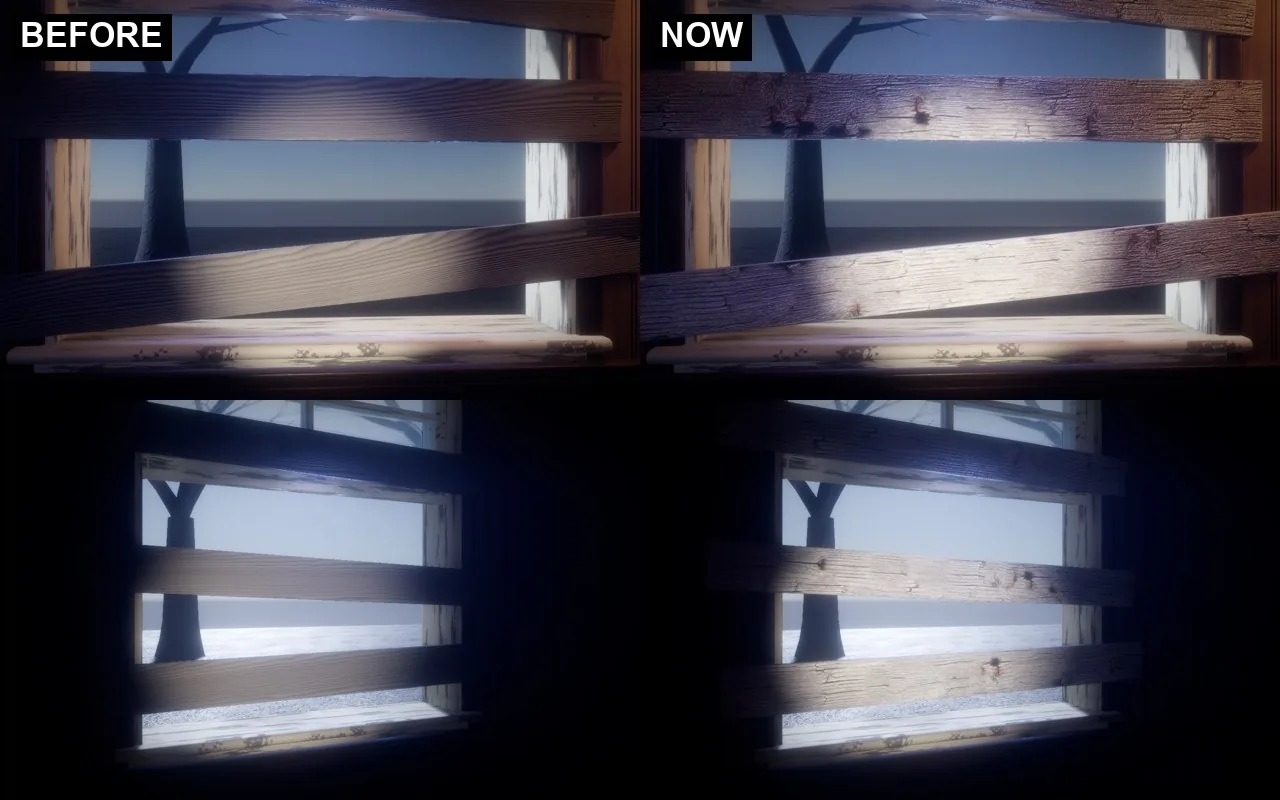
Before (left) and now (right), in the engine.
04 · Wear
Rust that follows the seams.
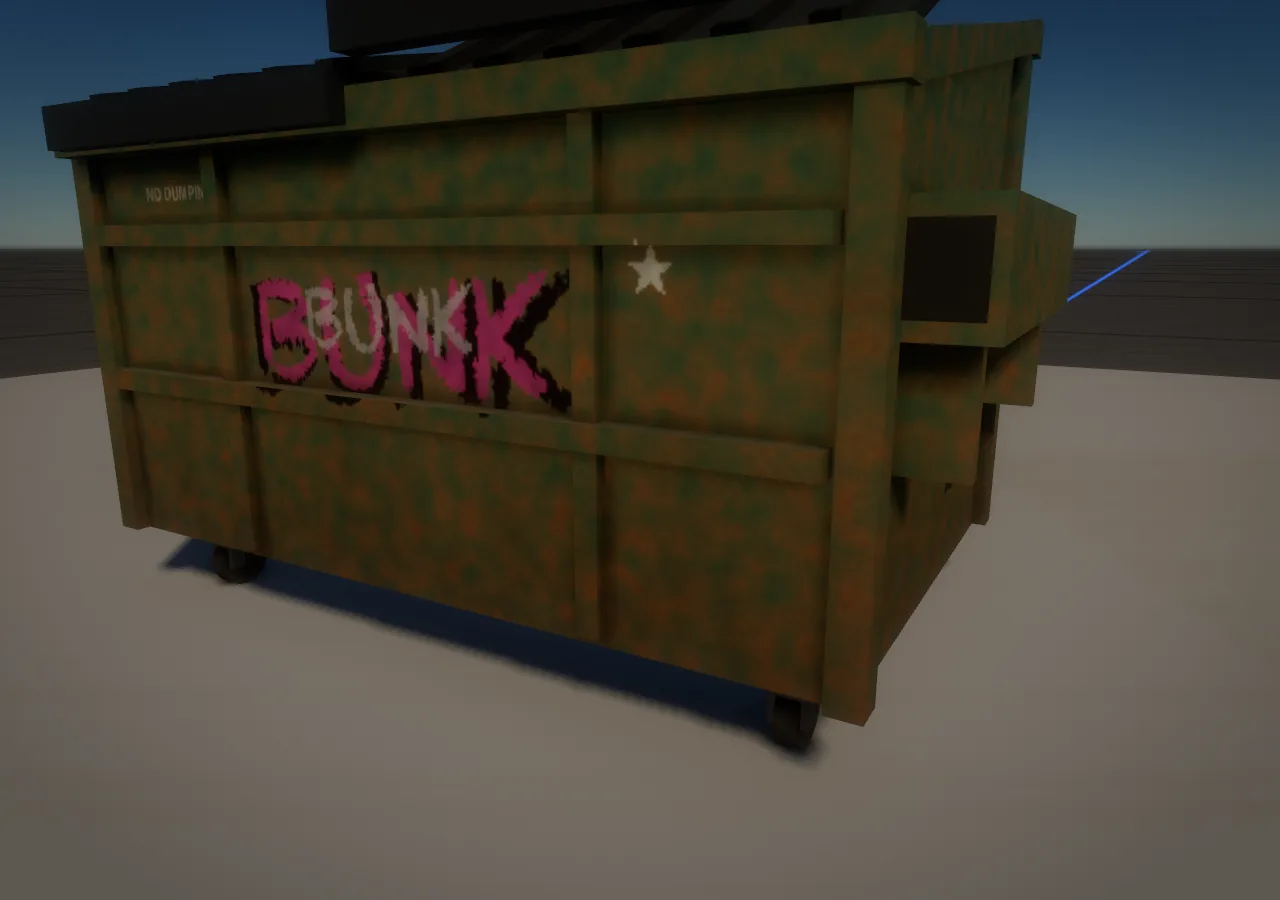
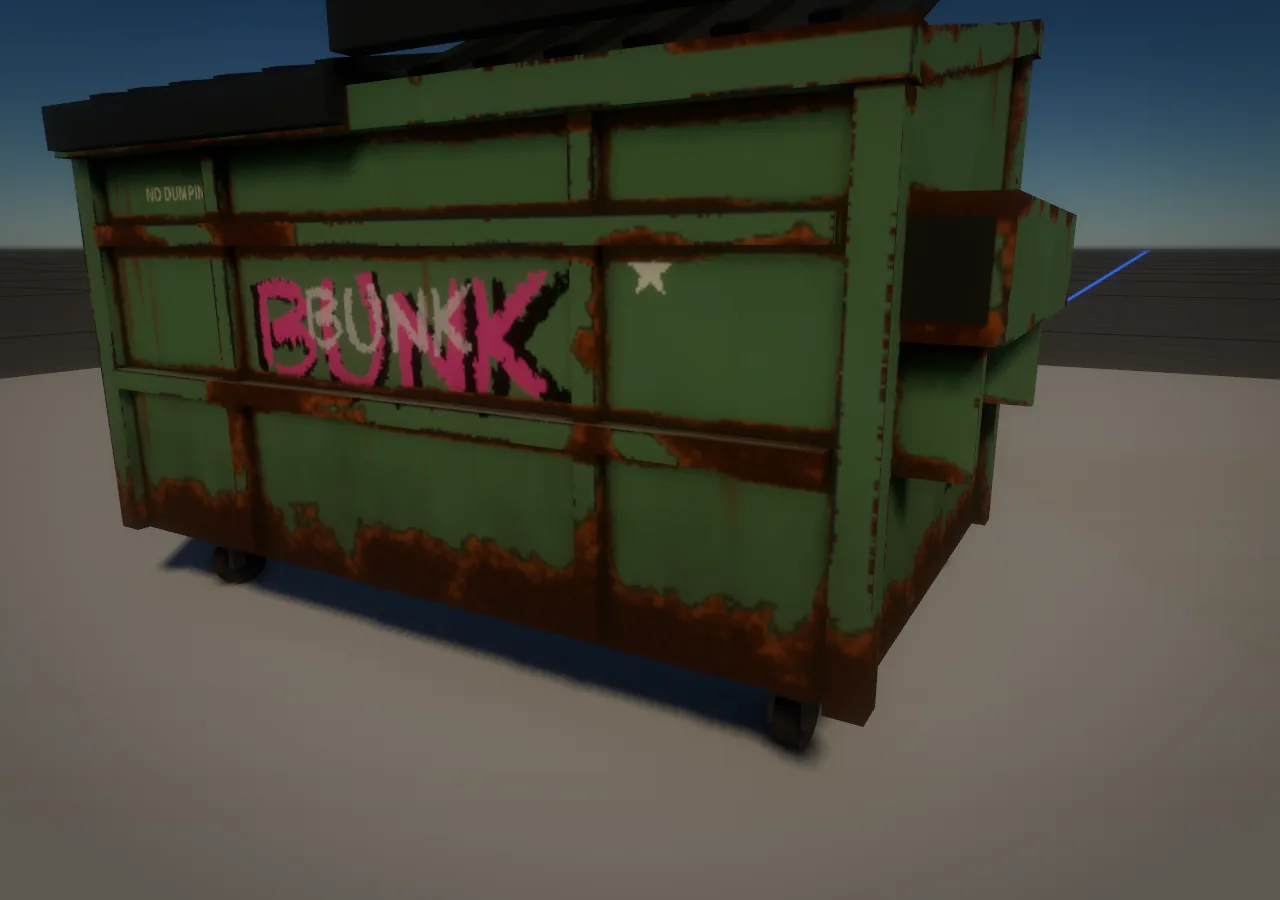
Real things age in particular places. Rust starts at edges and seams and runs down under them; paint lifts around it; water sits at the bottom of a drum and eats the rim. Material Maker reads the model's shape and puts the wear there, not in random blotches.
Drag to compare the same dumpster: even noise all over, then rust that follows its seams.
05 · Handled
Worn where hands and boots go.
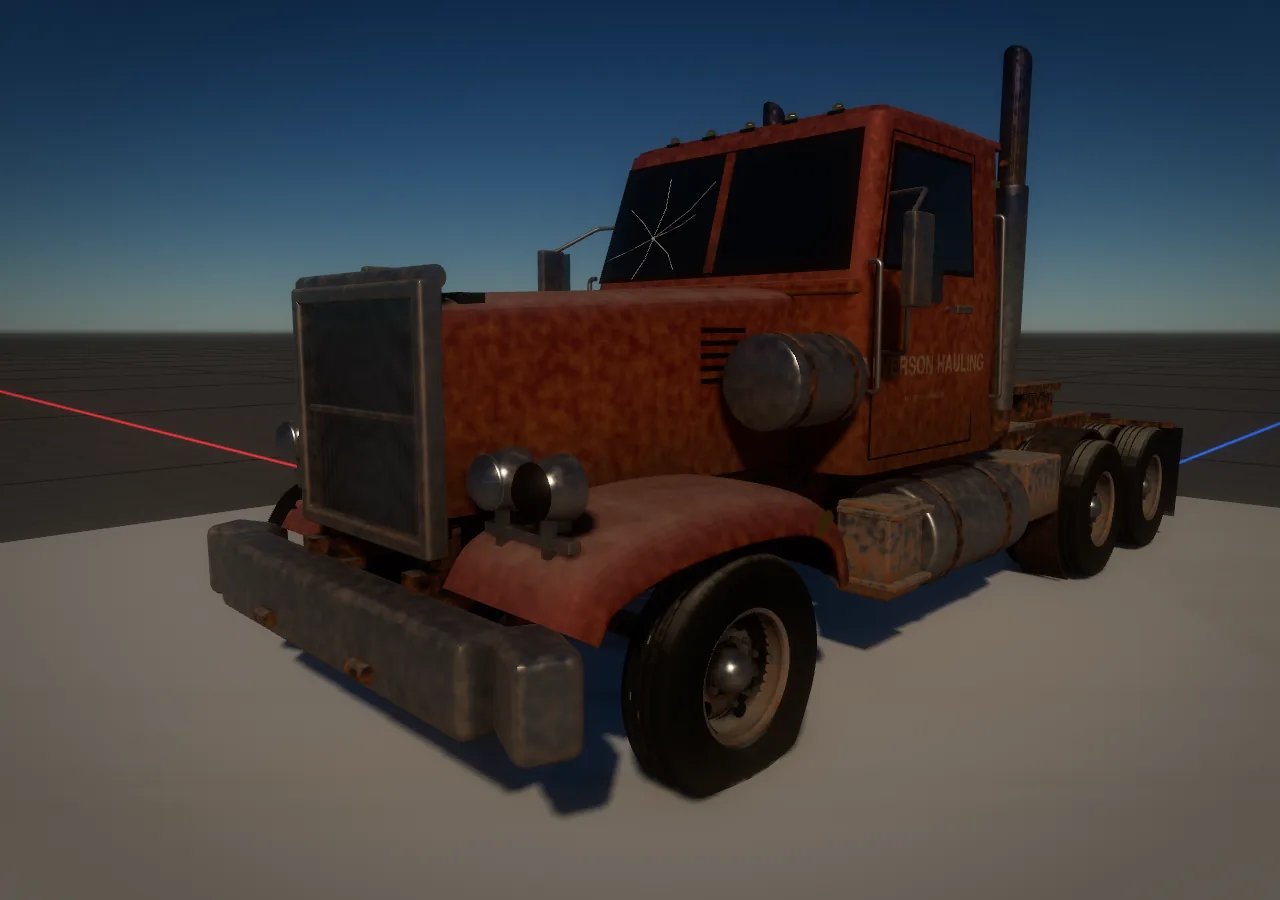
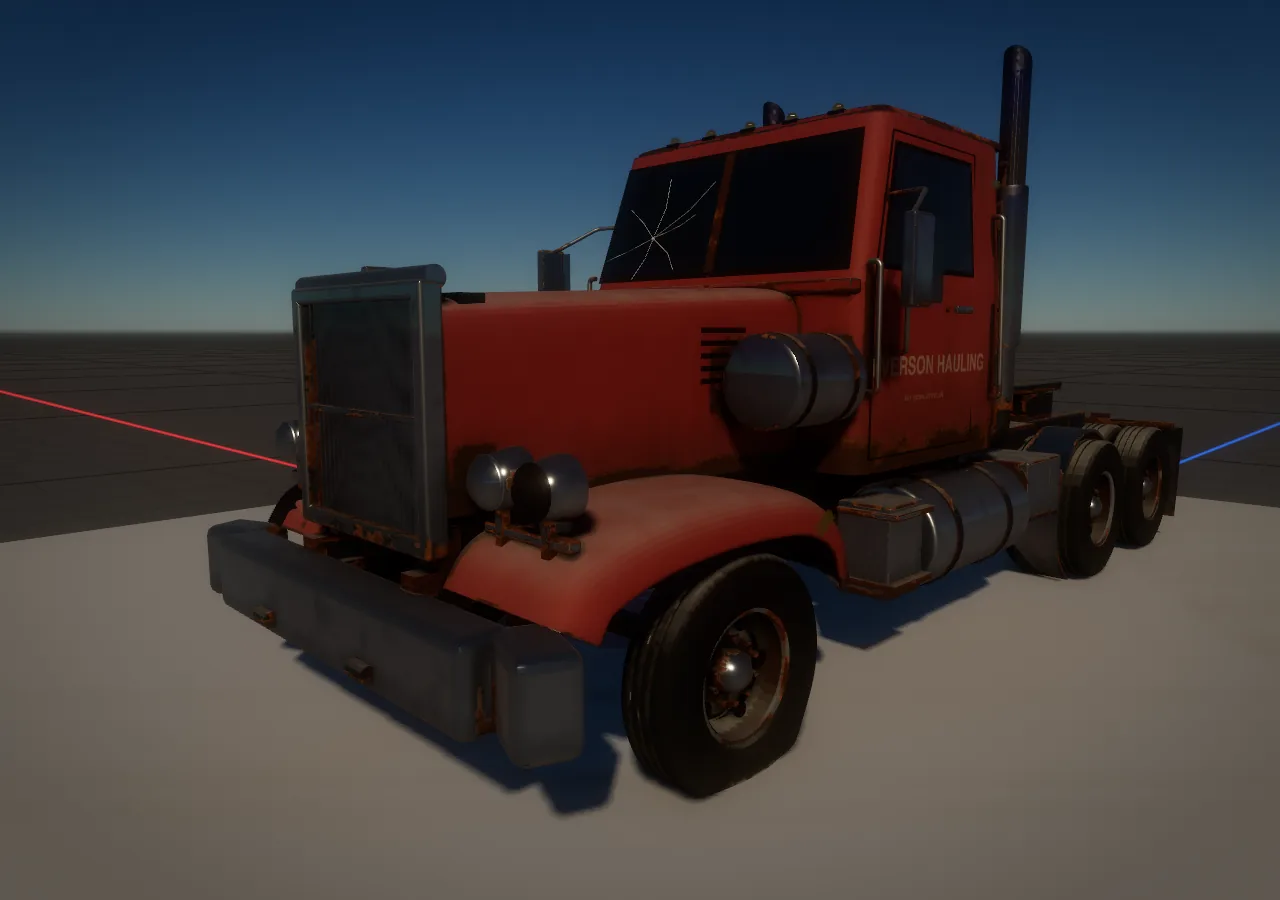
A truck cab's paint holds on the flat panels and wears through on the edges, the bumper and the steps, where hands and boots go. Wear comes in levels, from new to field-worn, so the same model can be fresh off the lot or ten years on a farm. Drag to compare.
06 · Gloss and metal
Varnish that catches the light, metal that stretches it.
Gloss is where materials give themselves away. Varnished wood should hold a soft highlight that breaks up along the grain; brushed metal should stretch a highlight along the brushing. Before and now, on the Ashgrove staircase and a brushed-metal panel.
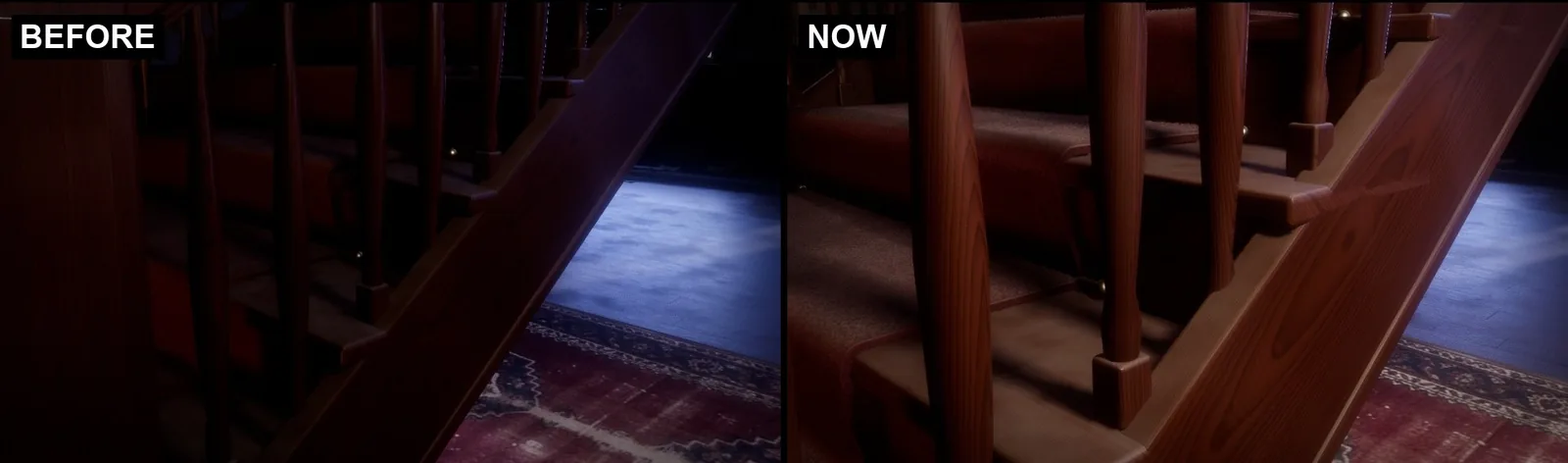
The staircase: before and now, in the engine.
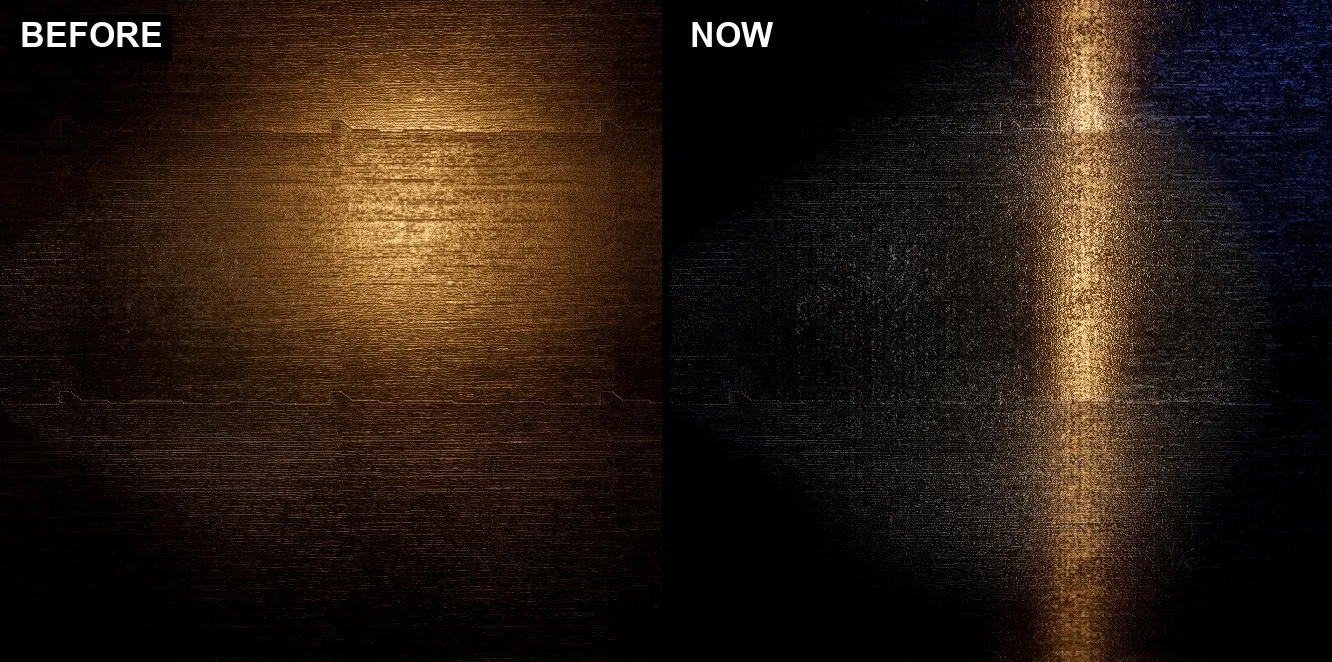
Brushed metal: before and now, in the engine.
07 · Fabric
Cloth that shows its weave.
Clothes start from fabric swatches: ripstop, wool, plaid flannel, leather, denim, canvas. Up close, the cloth shows its weave and threads; from across the room, it reads as the fabric it is.
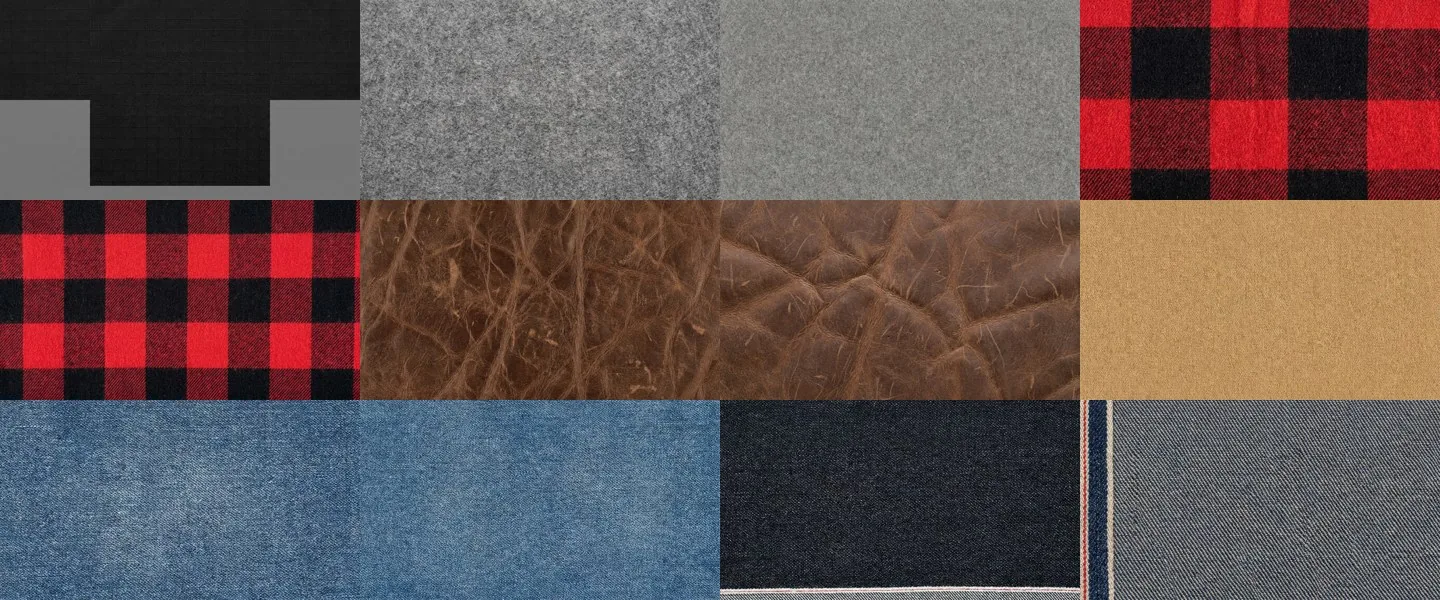
The fabric library.
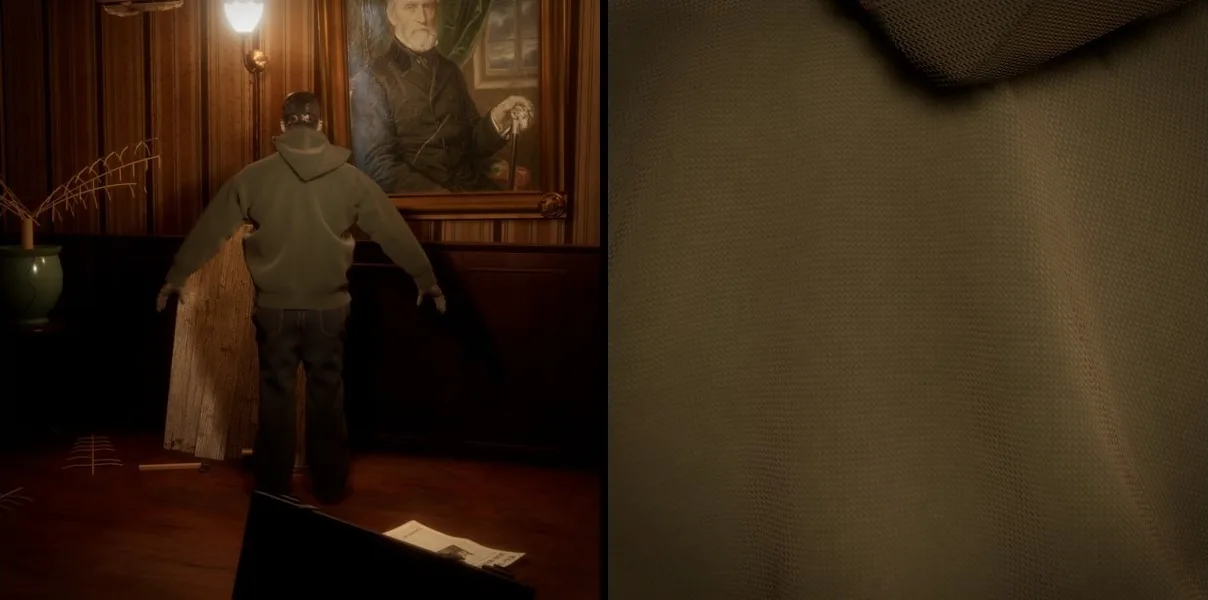
A hoodie in the hall, and its threads up close.
08 · Vinyl and chrome
Every surface in one shot.
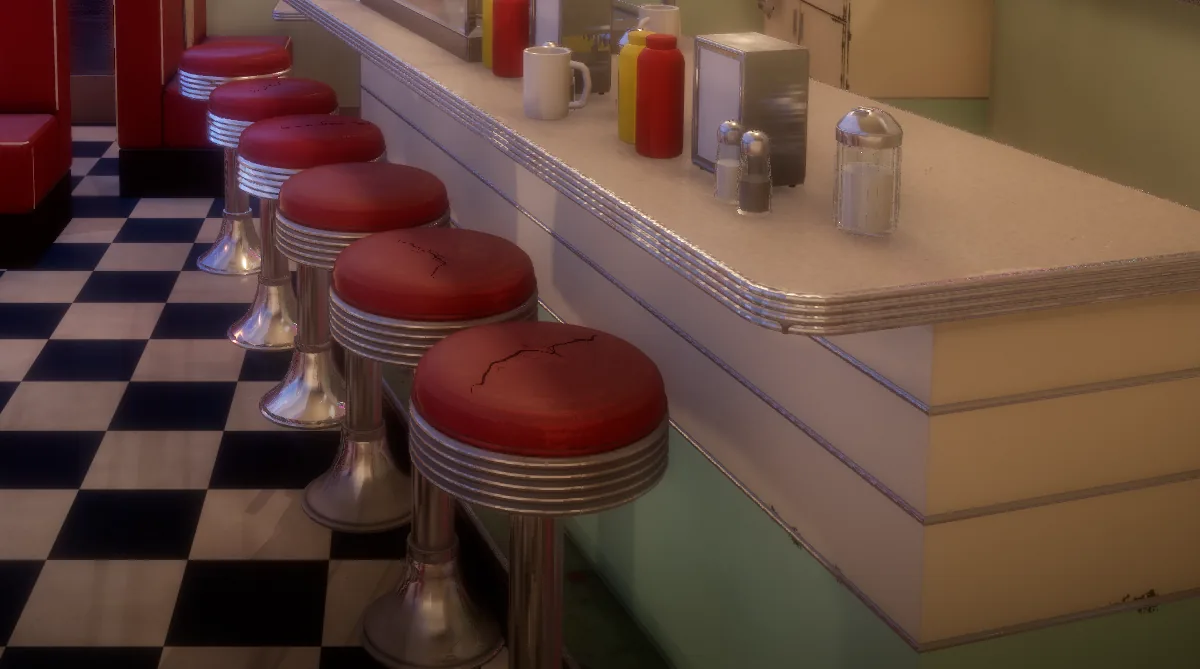
Rosie's Diner up close: red vinyl cracked where people sit, ribbed chrome that catches every light in the room, a counter worn at its edge, a checker floor.
See it for yourself.
Download Arcwright free and open any of our games to see these systems at work.
Start building today.
Arcwright is free. Download it, describe your game, and watch Claude Opus 5.5 build it in front of you.
 First 100 accounts get 200 free Sparks · left
On your phone? Play our games right here, or .