Technology · Proof and performance
It doesn't just build it. It proves it works.
Arcwright plays your game through the real controls, measures it and tells you what broke, with the object that caused it. And it finds what's slowing a frame down, then fixes the exact cost instead of switching features off.
- Write the checksIn plain words: the player can reach the exit in 15 seconds
- Autopilot playsThrough the real controls, like a player
- It measuresWins, times, frame times
- The proof reportWhat passed, what broke, and why
- Fix itThe AI or you
- Same everywhereSame inputs, same result
01 · Autopilot
A bot plays it like a player would.
Autopilot doesn't cheat its way to the end. It plays through the same controls a player uses: steer, jump, shoot, gather. Each run comes back as a Proof report: what passed, how often it won, the frame times, and anything that broke, with the object that caused it.
You write your own checks in plain words in the Playtest panel, like “the player can reach the exit in 15 seconds”, and they run every time.
Circuit: the bot finished 5 of 5 races.
02 · 2D too
Platformers get proven the same way.
Our 2D games are proven the same way. In Lantern Keep, the game from our 2D tutorial, the bot ran the level to the flag in 22.3 seconds. In Firefly Grove, drawn entirely in code with no pictures at all, it took 12.3 seconds.
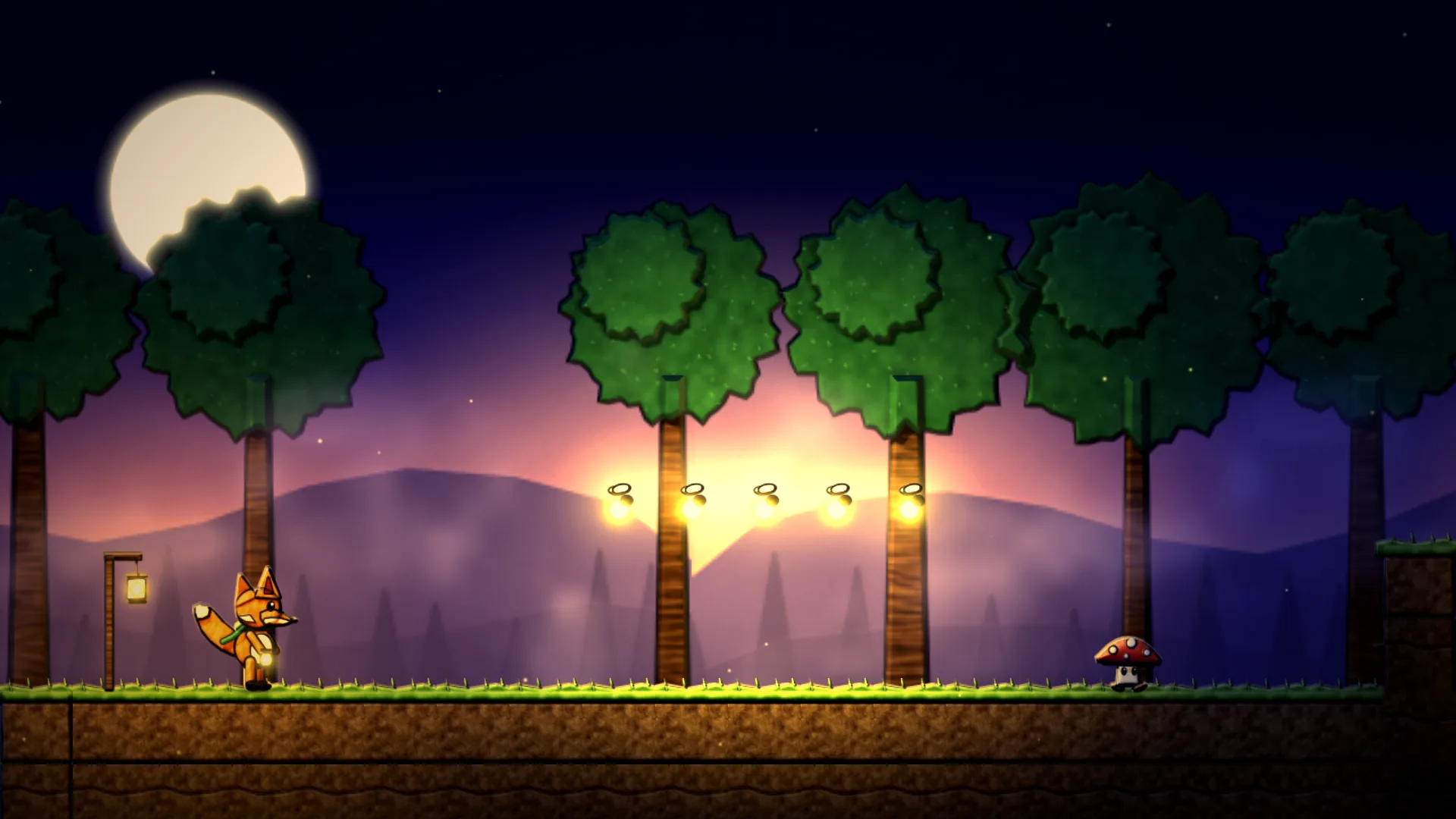
Firefly Grove, bot-proven in 12.3 seconds.
03 · Same result
Same inputs, same result, on every machine.
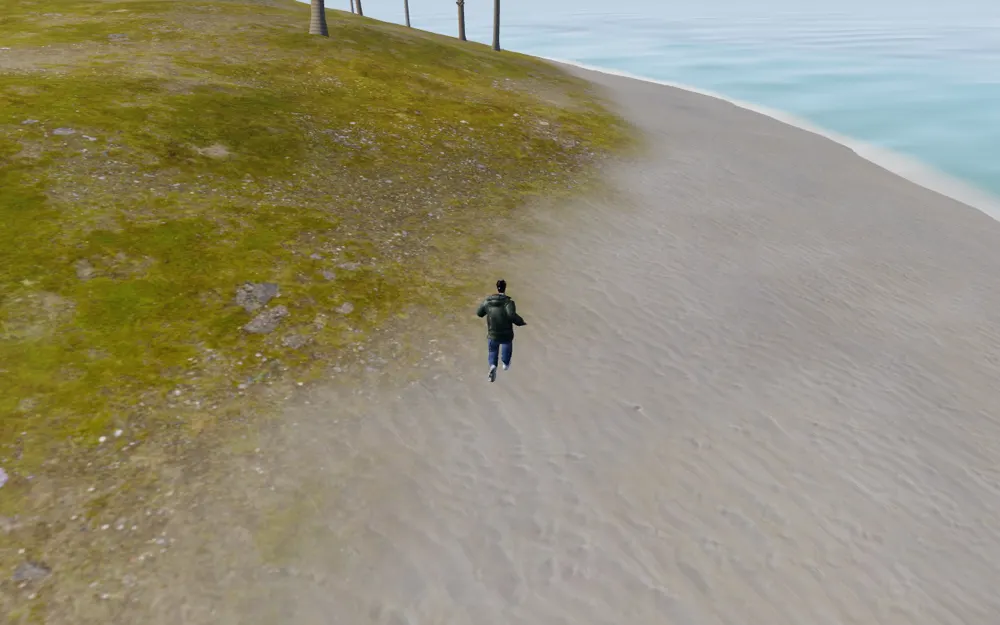
The engine runs the game the same way frame for frame, so the same inputs give the same result. The bot finishes Castaway in 217.49 seconds on a Mac and in 217.49 seconds on a Steam Deck.
04 · Rooms
Only draw what you can see.
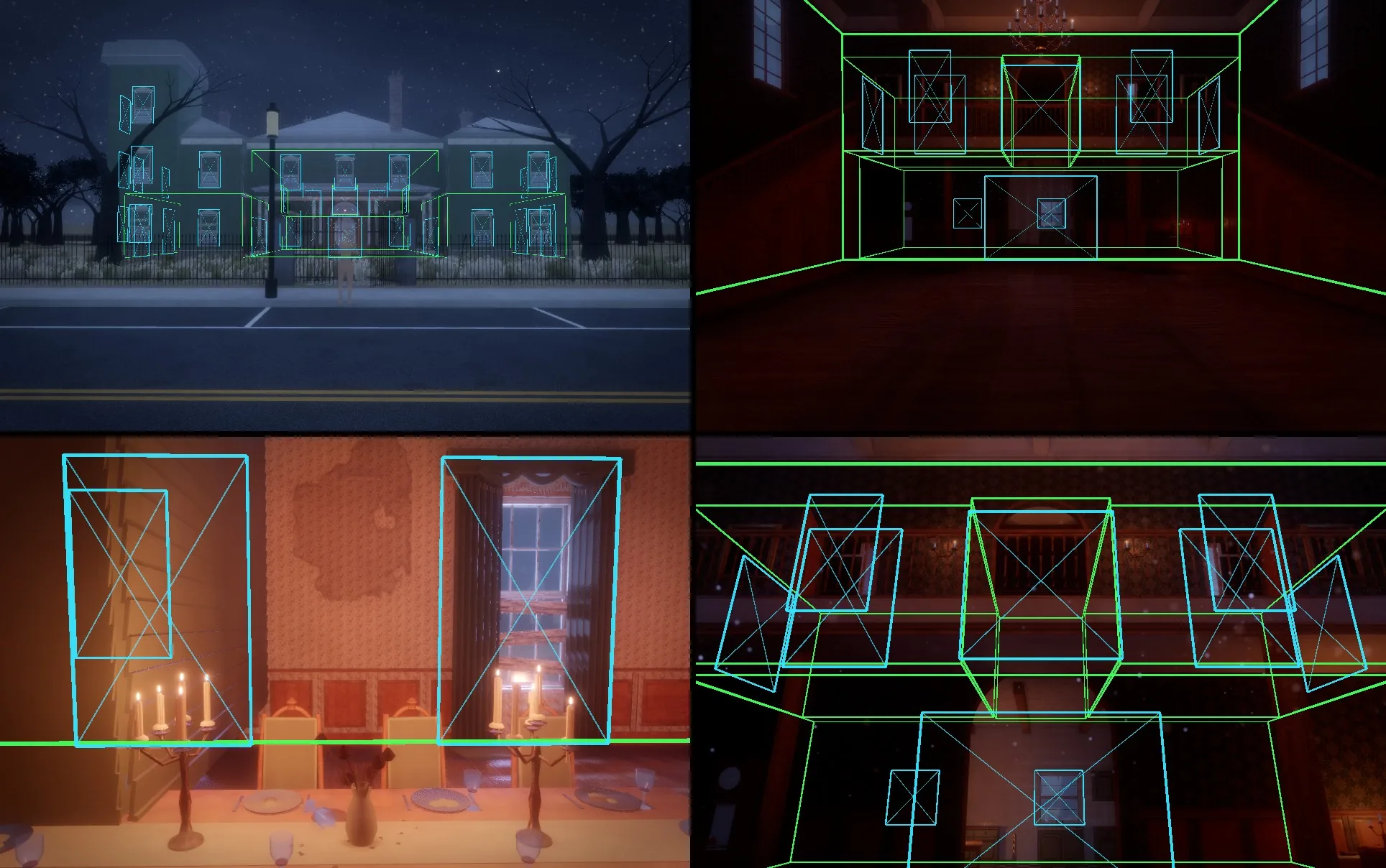
A building is split into rooms and the openings between them: doors and windows. Each frame the engine walks from the room you're in through the openings you can see, and leaves every other room out of the frame. Rooms near you stay on, lamps in unseen rooms fade out gently, and nothing pops.
In our old mansion test that took the dining room from 17 to 28 frames a second and the library from 19 to 31.
 1234
- 1Openings (cyan): every window and door on the front of the house.
- 2A room (green): the hall's bounds.
- 3An opening you can see through: the room behind it gets drawn.
- 4Openings into the hall from the balcony.
05 · Frame Doctor
Find the exact cost. Fix the exact cost.
Switching features off to find what's slow throws the picture away. The Frame Doctor measures each stage of a frame live, without slowing it down, and names what's spending the time: which lamp's shadows are being redrawn and why, which objects are moving, how many lights reach each spot.
Then the fix is exact. One example from our haunted mansion: flickering candle flames kept swapping shadow slots, which cost 19 ms a frame; holding the slots steady took the mansion from 13 to 29 frames a second with the picture unchanged. While you play, a governor steps the least-visible settings first, measures each step, and takes back any step that didn't help.
What the Frame Doctor found in one frame of the haunted mansion, Oct 23.
See it for yourself.
Download Arcwright free and open any of our games to see these systems at work.
Start building today.
Arcwright is free. Download it, describe your game, and watch Claude Opus 5.5 build it in front of you.
 First 100 accounts get 200 free Sparks · left
On your phone? Play our games right here, or .