Physics, vehicles and climbing, step by step
How things move in Arcwright: solid objects and falling ones, joints (doors, chains, rope bridges), cloth in the wind, climbing and cover, cars, karts and motorbikes, and aircraft, with the tools that test each one.
collider makes an object solid; add a rigid_body and it falls and tumbles. A joint hinges, swings or slides it. cloth puts up flags and curtains that blow in the wind. traversal adds ladders, ledges, wall runs, grapples, ziplines and cover. make_vehicle makes a drivable car; drive_test proves it. flight flies and films aircraft.Step 1: solid and falling things
collider: makes an object solid, so characters and bots walk round it and things hit it. Its shape is a box, a sphere, the model's bounding box (mesh_bounds) or the model's exact triangles (mesh, for things that never move).rigid_body: the object falls, tumbles and collides while the game plays: mass, friction, bounce (restitution), damping.fastcatches collisions however fast it moves (a bullet, a golf ball).- Ball sports:
sports_physicsreads and sets a ball's spin, drag and lift while you play, so a curve ball curves.
Step 2: joints
A joint connects an object to another (or to the world):
| kind | For |
|---|---|
hinge | A door, a lid, a wheel, a see-saw. Set its limits with min and max, and give it a motor to turn it. |
ball | A lamp on a chain, a wrecking ball. |
rope | Only pulls: a swinging sign, a rope bridge's planks, a hanging crate. |
rod | Holds a fixed distance. |
slider | A drawer, a piston, a lift. |
weld | Glued together until something breaks it (break_force). |
In Pro mode, select a joint in the viewport to drag its stops. The eye button in the top bar draws joints over the picture while you play.
Step 3: cloth
cloth puts up real cloth: a flag on a pole, curtains, a banner between posts, a tarp on a frame, sheets on a line, a cape. It hangs from its pins, blows in the scene's wind (gusts ripple across it) and never passes through the poles, walls, crates and characters near it.
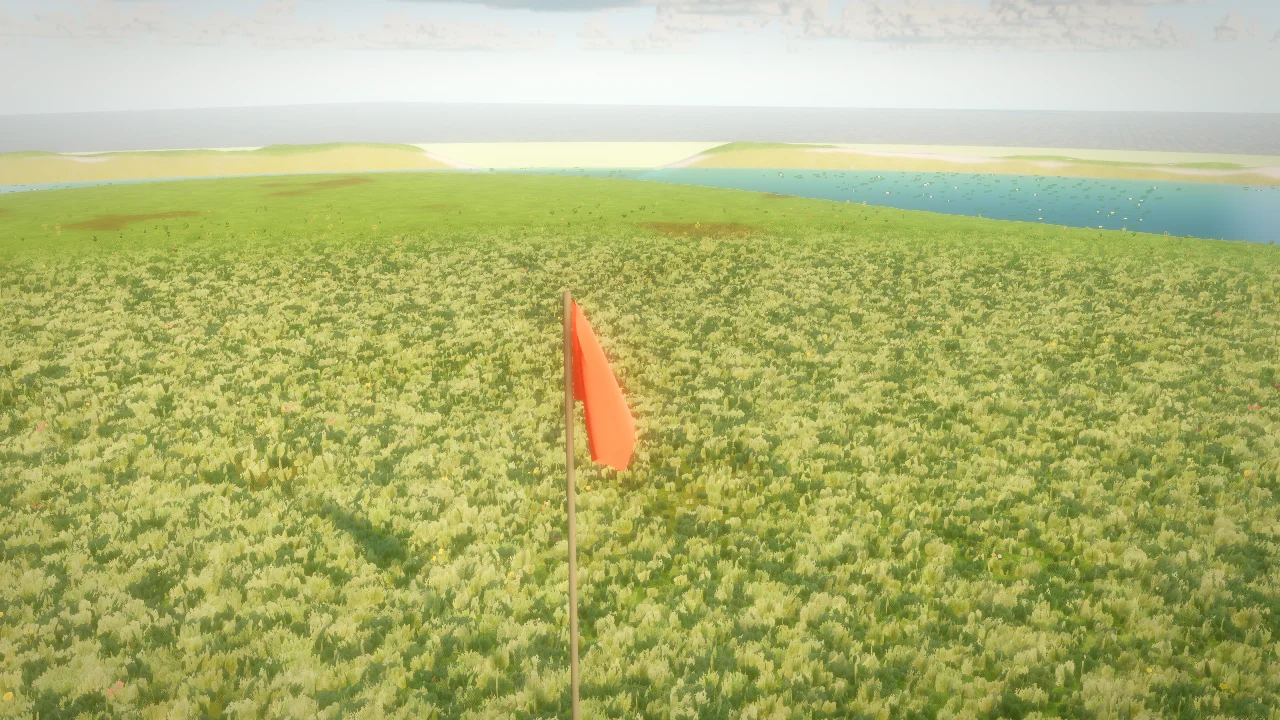
- Make one: pick a shape, its size and colour; a flag gets a pole, a banner two posts, a tarp four.
- Pins: top, left, right, corners or any points. Unpin lets it tear loose or be pulled down.
- Tune it live: stiffness, stretch, weight, damping and how much the wind moves it, changed while the game plays.
Clothes on characters are their own system: see Clothes.
Step 4: climbing and cover
traversal gives characters real moves, built into the engine:
- Ladders: add one against a wall (or tag any object
traverse:ladder); walk into it to get on, climb, step off at the top. - Ledges: jump or fall past a top edge and the hands catch it; shimmy left and right, pull up, or let go.
- Wall runs: jump along a wall while running fast, then kick off.
- Grapples and ziplines, and cover with peeking round corners.
The character's animation gets the states for free (on a ladder, hanging, shimmying, wall running, ziplining, in cover, peeking). traversal with action: play drives the real controls toward a ladder and up it in a private copy, and gives you the timeline, so you know it works before you play.
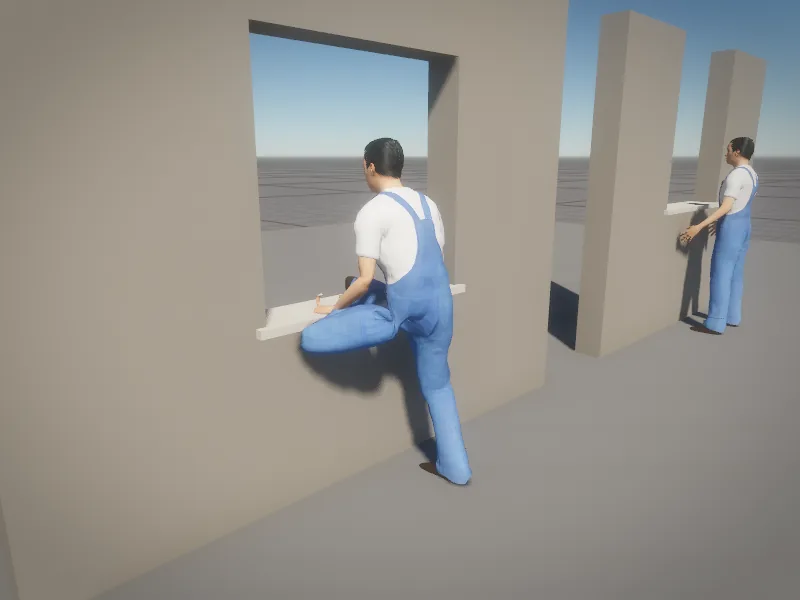
More: Climbing and cover.
Step 5: cars, karts and motorbikes
- Make it drive:
make_vehiclemakes a vehicle from one of seven presets (sports, sedan, SUV, pickup, truck, kart, motorbike), or gives real dynamics to a car model you already have, without changing its art.assemble_vehicleturns a forged car into one: body, four spinning wheels at the hubs, and the dynamics measured from the model. - Tune it:
tune_vehiclechanges grip, power, tyres, suspension, assists and steering feel live while you drive, so you feel each change. - Prove it:
drive_testis the feel report every car must pass: three racing laps, a panic swerve, a lane change and a handbrake turn, then a 32-gate circuit at three assist levels, with what to change when it fails.vehicle_telemetryreads the car like a race engineer: g-forces, every wheel's slip and load, the balance in corners. - Lights:
vehicle_lightsworks the head lamps, indicators and hazards, and shows the brake lamps and the exhaust.
The vehicle component holds it all: mass, power, grip, springs and dampers, anti-roll, wheelbase and track, centre of gravity, ABS, traction and stability control, automatic gears, drive. Building a car's body panel by panel is covered in Nano Banana, step by step; cars built from scratch are still being improved.
Step 6: aircraft
flight works while the game plays: it lists every aircraft (speed, altitude, heading, g, throttle, gear, weapons, target), flies the player's jet on autopilot through the real controls (take off, hold a heading, fly to a point, attack, land on a 3° approach), fires the gun, missiles or flares, switches between cockpit, chase and orbit views, and places a fixed or riding camera for stills and video.
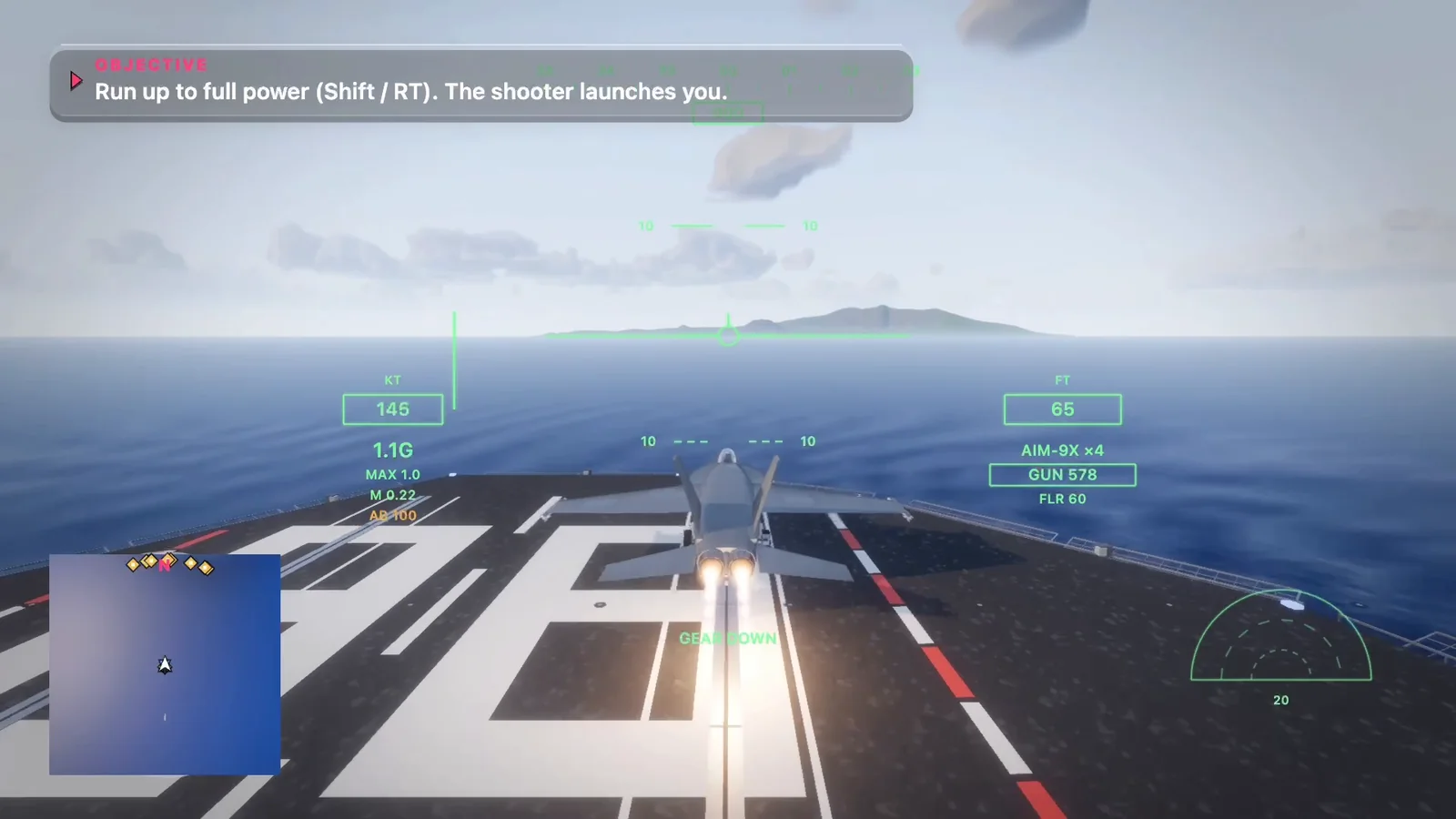
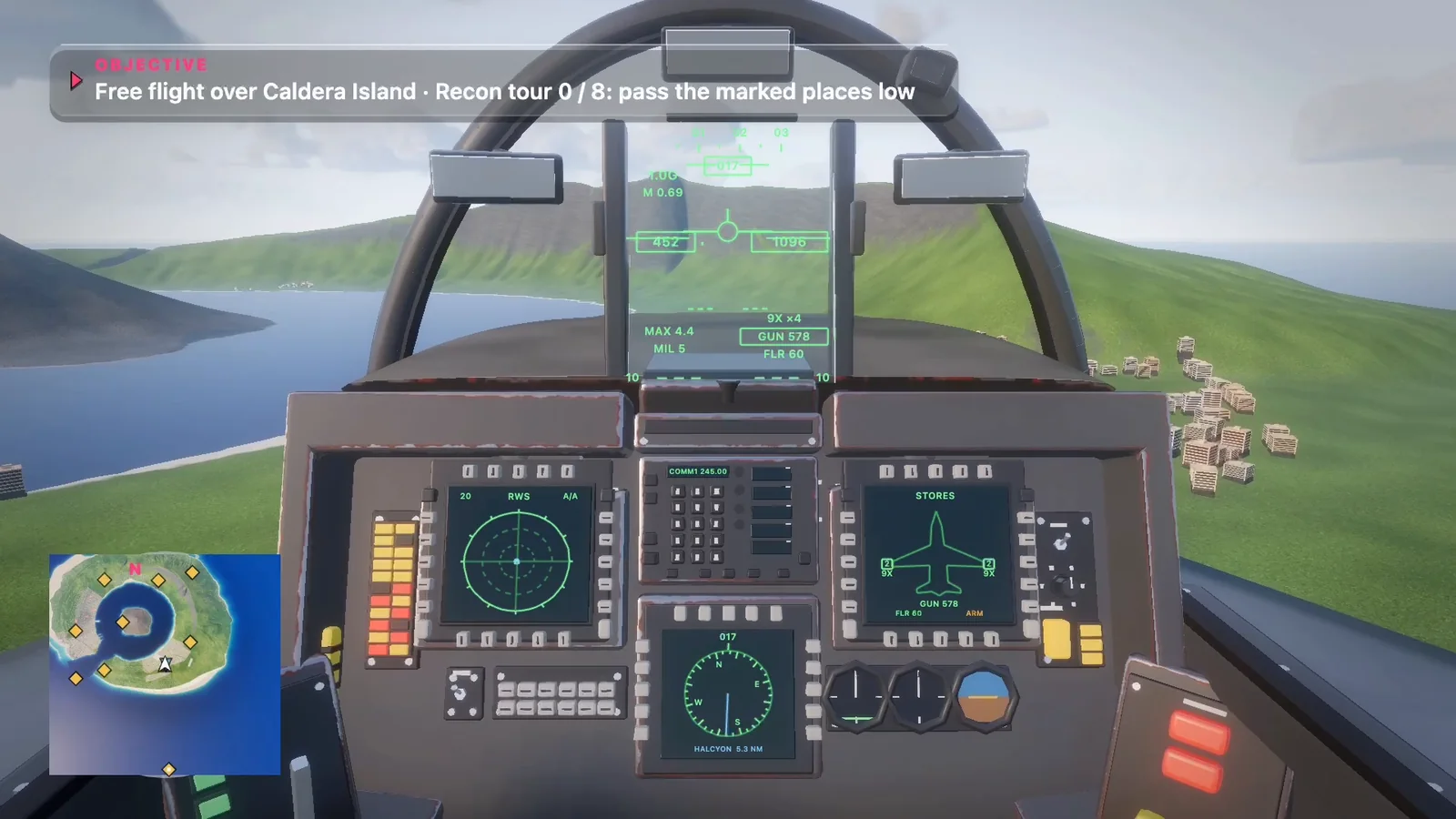
Night Shield, our jet demo, is made this way. Play it in your browser.
Bake physics into a cutscene
record_physics plays a copy of the scene, lets physics move an object (thrown, knocked, or a ragdoll), and records it into a sequence as keys, so a cutscene plays the same every time. rig_physics does the same for part of a character's animation: a hit, a fall, and back into the keys after.
More: Physics joints, Genre kits, Game feel.